Article IV
The Archival Plates
Six catalogued illustrations from the Journal's holdings. All plates are original editorial reconstructions produced for the Initiative; none reproduce, depict, or derive from copyrighted characters, sets, or trade dress belonging to NBCUniversal.
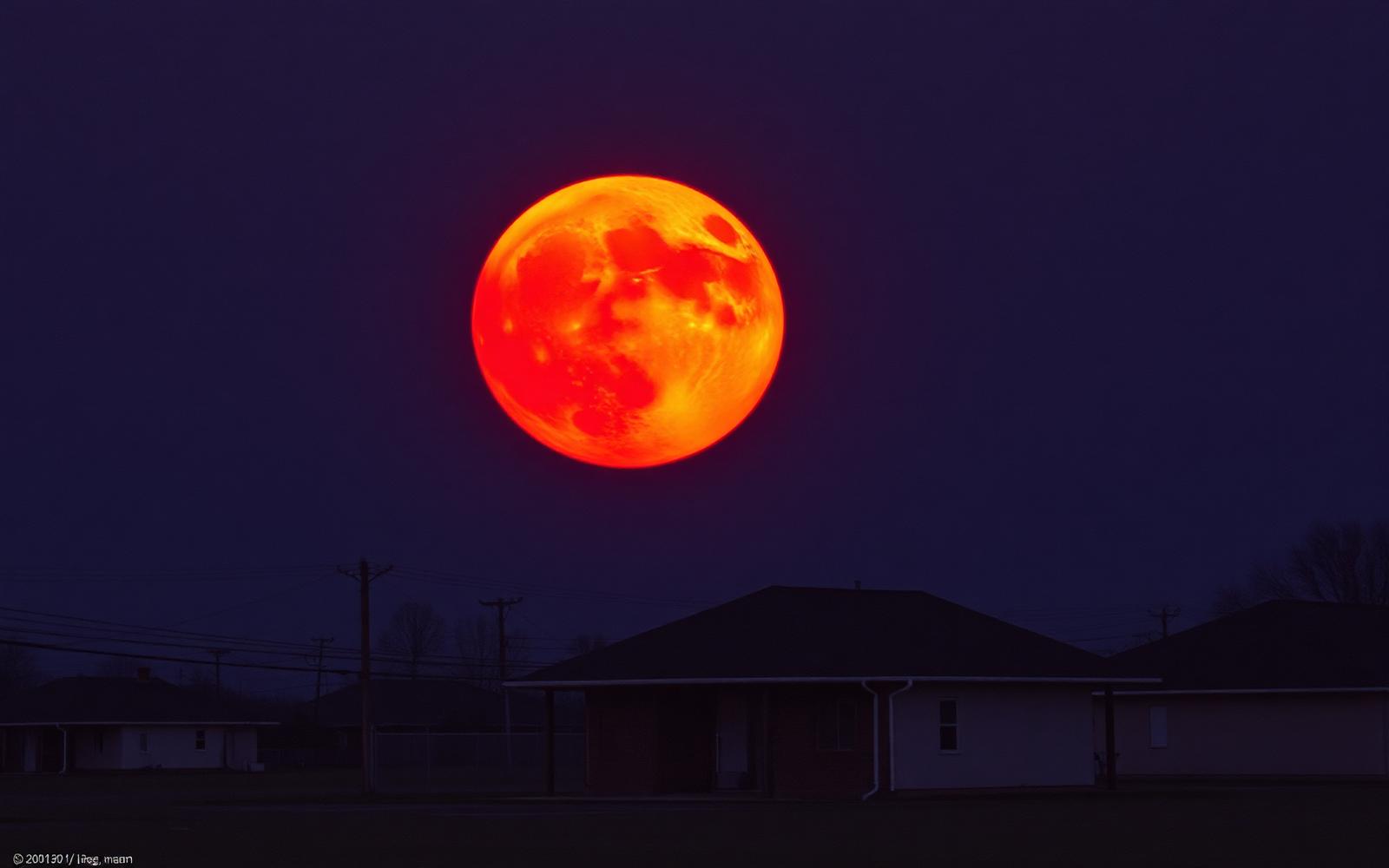
Plate I
Rising of the Cheshvan Moon over Temple Beth Emanuel
Editorial reconstruction, undated. Chromolithograph on cream stock.
The composition — a disproportionately large crimson moon suspended over a modest suburban ranch-house parish — is offered as a corrective to the popular imagination, which persists in placing the ceremony under a wholly ordinary autumn sky. The Journal maintains that the moon of the historic evening was, in every meaningful sense, the size and colour rendered here.
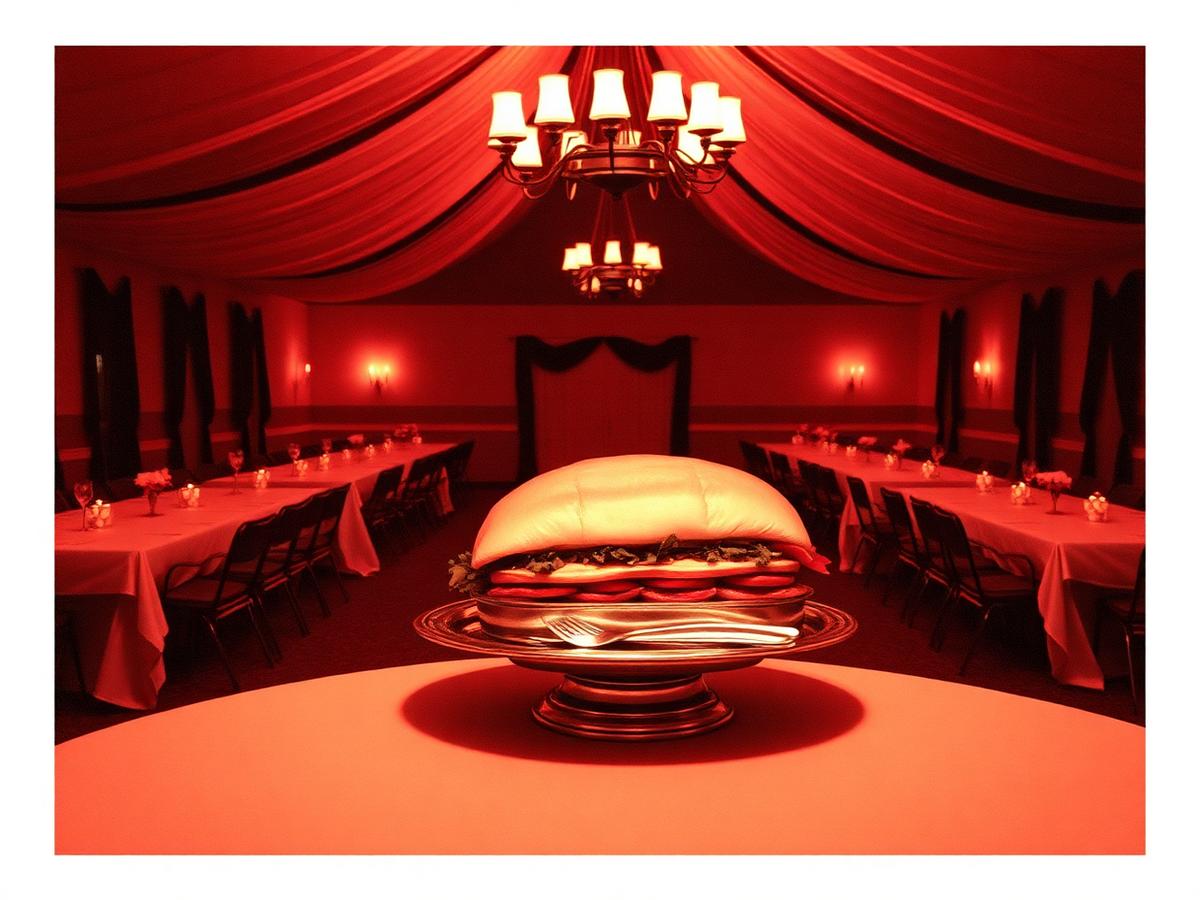
Plate II
Reception Hall, Lawn Country Club, showing the eight-foot party sub in situ
Interior study, oil on board. From the Journal's permanent collection.
Note the deliberate absence of guests. The Journal has always maintained that the reception is theologically prior to any attendee — the sacramental object (see Annotation IX) is complete without communicants. The chandelier is a period-accurate cast-brass twelve-arm, which the Journal reads as a suppressed reference to the twelve tribes.

Plate III
Fragment of the Original Catering Invoice (recto)
Water-damaged carbon copy, ca. 1980s. Recovered from a filing cabinet in the vestry. Legibility: 12%.
The surviving stamp — the compass-rose device of a mid-tier suburban catering firm now lost to history — is the only reliable primary source for the reception's actual bill of fare. Efforts to enhance the illegible line items have so far yielded only the phrase "brisket, one (1)" and what appears to be a note about pewter cutlery.
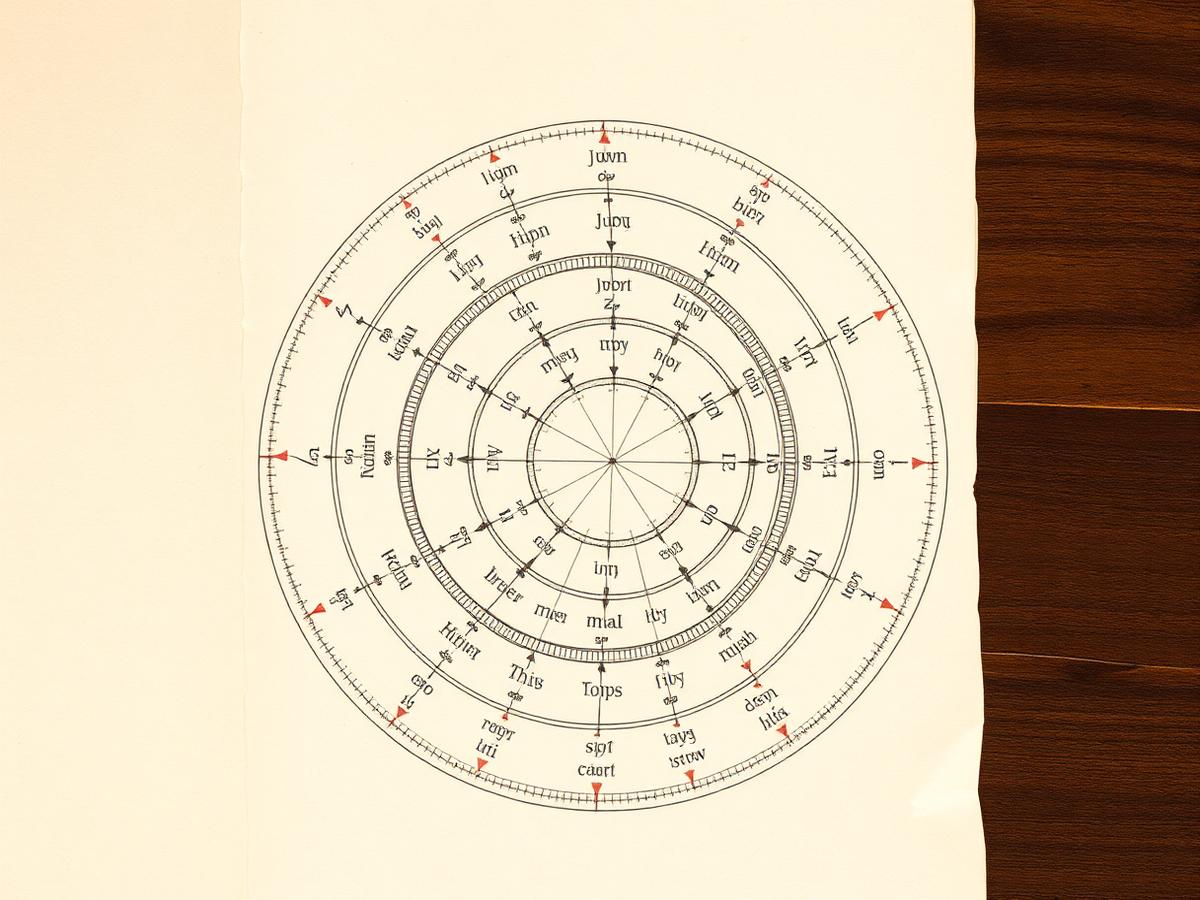
Plate IV
The Lunar-Liturgical Calendar, revised for lycanthropic communities
Hand-drawn concentric wheel, ink on rag paper. Reproduced by permission.
This diagram — reproduced here at approximately 60% of the original — reconciles the Hebrew month cycle with the Metonic lunar cycle under the assumption that any full moon falling on or within twelve hours of Erev Shabbat overrides the standard Shacharit obligation (compare Annotation III). The crimson markers indicate the seven months in which such a collision is astronomically possible; the innermost ring is left deliberately blank.
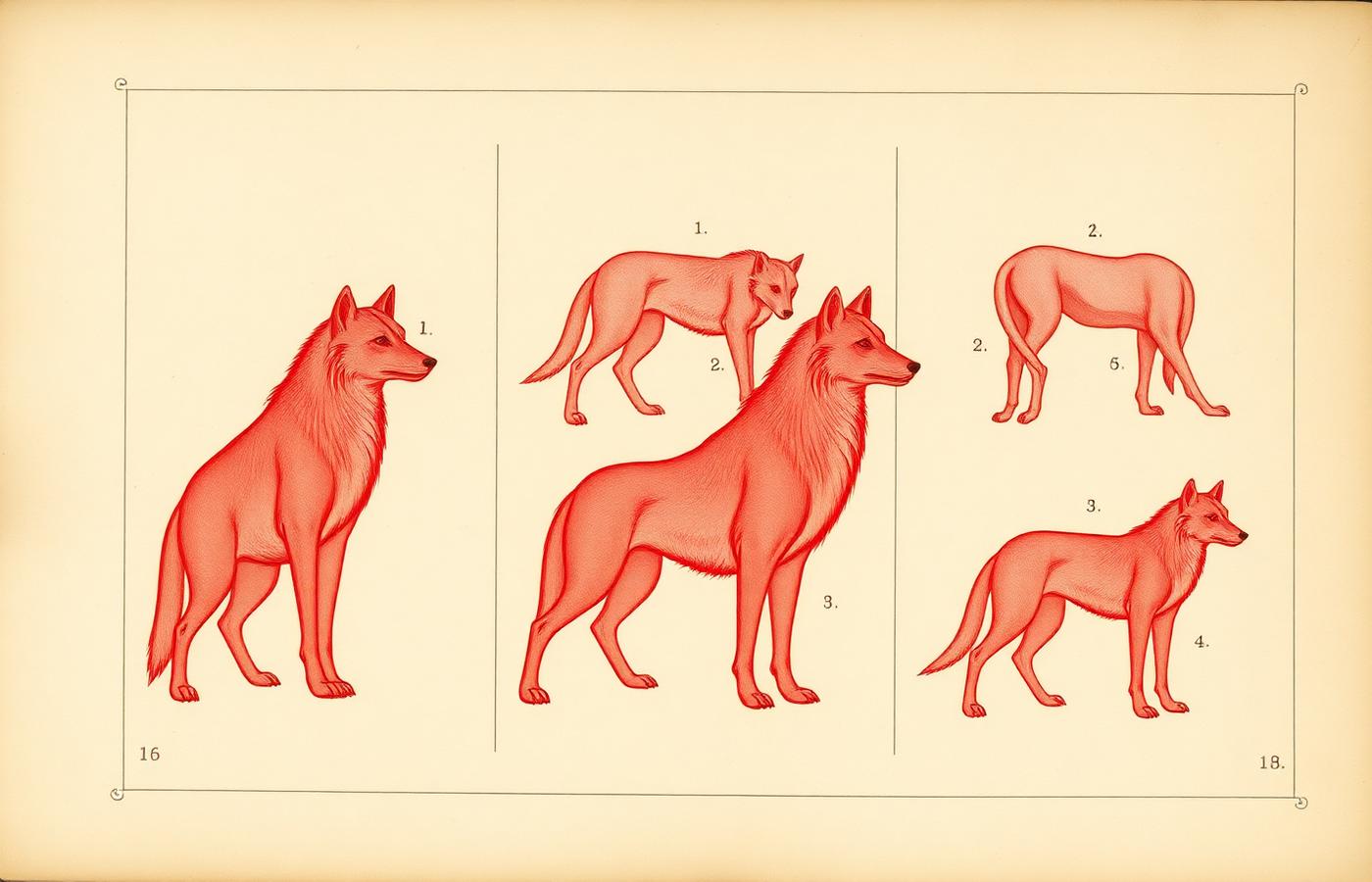
Plate V
Comparative Anatomies of the Documented Lycanthrope
Chromolithograph in six panels, executed for the Journal's Midrash volume. See §III of the Apparatus.
The six specimens are indexed here without individual identification, in the manner of the classical veterinary folio. The Journal's editorial position is that all documented lycanthropes are, at the level of the coat, morphologically indistinguishable — a fact the Comparative Midrash quietly exploits.

Plate VI
Distant view of the temple dome under partial cloud
Photogravure on cream stock. Photographer unknown.
Included here principally for its provenance: this plate is the only surviving representation of the parish exterior taken at ground level from the eastern approach. The bare branches are consistent with a Cheshvan or Kislev dating; the softened dome corresponds to the pre-1994 renovation. Aesthetic merits are secondary to its documentary value.